AI Strategy
What Is an AI Employee? (And How It's Different From a Chatbot)
If you've tried a chatbot and walked away unimpressed, you're not alone. Most businesses have. A customer types a question, the bot loops through a decision tree, fails to understand the nuance, and escalates to a human anyway. It saves no one time. It impresses no one.
AI employees are something fundamentally different. And understanding the distinction isn't just semantics — it determines whether AI actually moves the needle for your business or just adds complexity to your stack.
The Chatbot Model: Reactive, Shallow, Siloed
A chatbot is designed to respond. It sits on a channel — a website widget, a Slack integration, an SMS line — and waits. When triggered, it pattern-matches against a set of predefined flows and tries to produce a useful response.
The limitations are structural:
- Single-task: A customer service chatbot handles customer service. It doesn't coordinate with your ops team, update your CRM, or send a follow-up email tomorrow morning.
- Reactive only: It waits to be asked. It doesn't monitor, anticipate, or initiate.
- No memory across sessions: Most chatbots start fresh every conversation. They don't know what happened last Tuesday.
- No integration depth: They can look up an order status. They can't update a spreadsheet, schedule a calendar event, draft a contract summary, and send a Slack message — all from a single trigger.
"A chatbot is a better FAQ page. An AI employee is a better hire."
The AI Employee Model: Proactive, Integrated, Autonomous
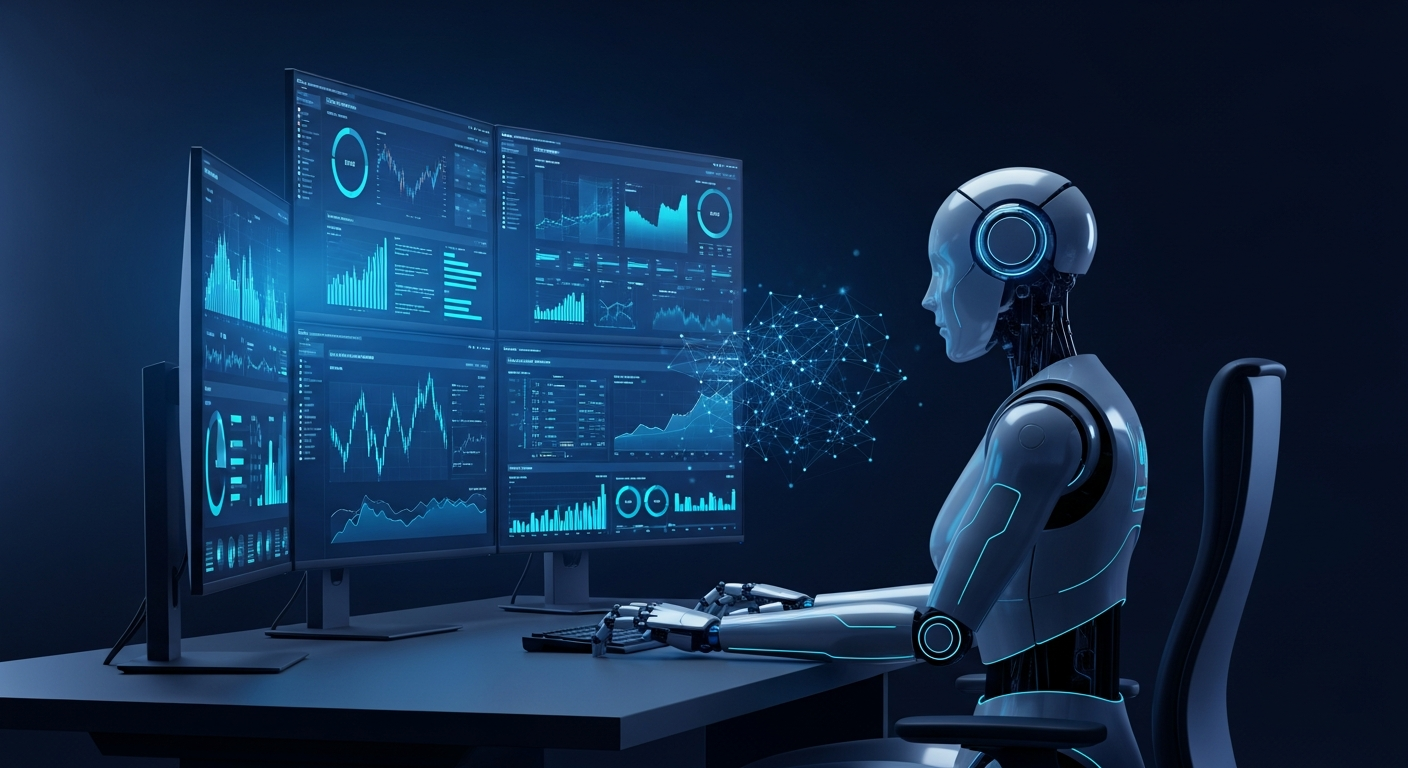
An AI employee is built to operate — not just respond. It's an autonomous agent with access to your systems, a defined role, and the ability to execute multi-step workflows without hand-holding.
Here's what that looks like in practice:
Scenario: Operations Manager AI
Every morning at 8 AM, your AI Operations Manager pulls the previous day's metrics from your project management tool, formats a status update, and sends it to the relevant Slack channels. It checks for overdue tasks, flags anything that needs human escalation, and updates a shared dashboard — all before your team's standup. No prompt required. No human involvement.
Scenario: Sales Development Rep AI
A new lead fills out a form on your website. Your AI SDR immediately qualifies them against your ICP criteria, enriches their profile with company data, drafts a personalized outreach email (referencing their specific industry and pain points), sends it, schedules a follow-up for day 3, and logs everything in your CRM. Your human SDR doesn't touch it until the prospect replies with interest.
Scenario: Customer Success Agent AI
Your AI CS agent monitors product usage data. When it detects that a client's engagement has dropped 40% over two weeks — a leading indicator of churn — it automatically sends a check-in email, schedules a success review call, and alerts the account owner. No one had to notice. The AI was watching.
The Key Differences
It comes down to three things:
- Proactivity: AI employees act without being asked. They monitor, schedule, and initiate based on conditions and schedules.
- Multi-step execution: They chain together complex workflows across multiple tools — email, calendar, CRM, Slack, spreadsheets — in a single operation.
- Contextual memory: They maintain context over time. They know this client's history, that project's status, which tasks are overdue.
What AI Employees Are Not
They're not magic. They're not general intelligence. They're not a replacement for human judgment on high-stakes, nuanced decisions. An AI employee won't negotiate a complex deal or handle a client relationship that's in crisis. Those require human empathy, experience, and adaptability.
What they replace is the operational load — the scheduling, the follow-ups, the reporting, the data entry, the routine communications — that consumes 40-60% of your team's time without generating strategic value.
Why Now?
Three things converged in the last 18 months to make this viable at scale: large language models powerful enough to handle real-world reasoning, agent frameworks that enable reliable multi-step execution, and integrations deep enough to connect to the systems businesses actually run on.
The technology is no longer experimental. Businesses deploying AI employees today aren't running pilots — they're replacing headcount and reallocating human talent to the work that actually requires humans.
The question isn't whether AI employees will be part of enterprise operations. It's whether you deploy them before your competitors do.
Ready to see an AI employee in action?
Book a 30-minute discovery call. We'll map your biggest operational bottleneck and show you exactly how an AI employee would handle it.
Book a Discovery Call →